
Il nostro miele
Ogni anno alla fine dell'inverno i nostri alveari vengono preparati per essere forti sani e popolosi, in modo tale da arrivare nel periodo delle fioriture, da maggio ad agosto, in piena forma.
Conoscendo la natura che ci circonda seguiamo con attenzione i segnali che ci dà e all'incirca una settimana prima di una fioritura importante posiamo i melari sui nostri alveari con la speranza che il meteo sia dalla nostra parte. Quando il primo melario è pieno al 70% ne aggiungiamo un secondo poi un terzo e così via fino alla fine della fioritura. Il miele appena raccolto ha un'umidità elevata, per questo motivo le api lo asciugano aumentando la circolazione dell'aria all'interno dell'alveare tramite il battito delle loro ali.
Quando le api reputano che il miele sia sufficientemente asciutto, e quindi più facilmente conservabile, iniziano ad opercolarlo ovvero sigillano le celle dei favi con uno strato di cera purissima, è questo il segnale che il miele è pronto per essere lavorato.
Tolti i melari dagli alveari li portiamo in laboratorio e come prima cosa misuriamo l'umidità del miele con uno strumento chiamato rifrattometro, se è intorno al 17% iniziamo la lavorazione.
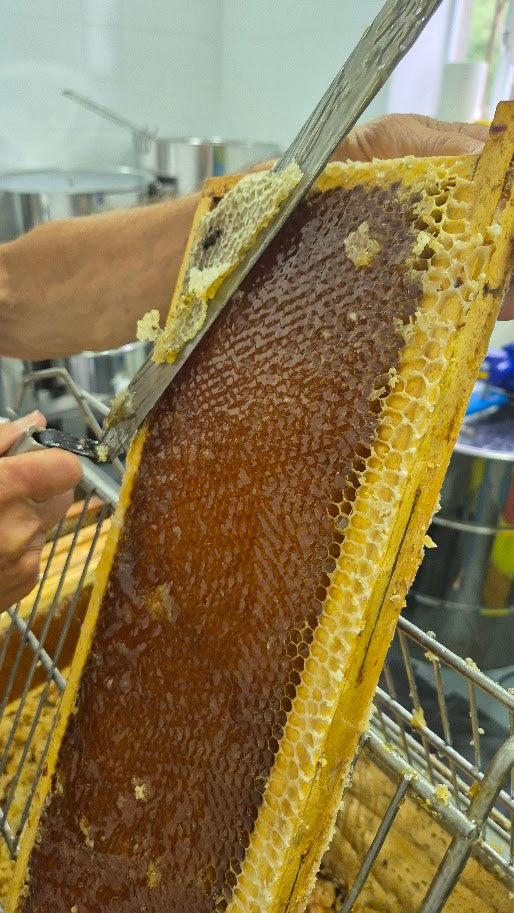
Si parte con la disopercolatura ovvero si rimuove il "tappo" di cera utilizzando un apposito coltello o una particolare forchetta.
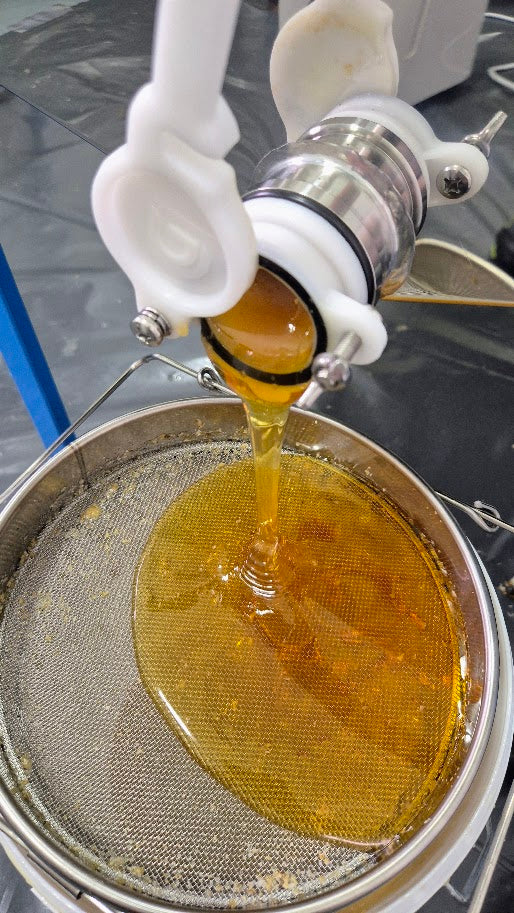
Il secondo passaggio avviene all'interno dello smielatore, durante questa operazione il miele viene estratto dalle cellette grazie alla forza centrifuga, deposita sul fondo e uscendo dall'apposito rubinetto passa attraverso un filtro che trattiene tutto ciò che non è miele.
In seguito il nostro prezioso nettare viene riposto all'interno di appositi contenitori in acciaio inox, chiamati maturatori, li rimane a riposare all'incirca per 30 giorni al termine dei quali è pronto per essere invasettato e commercializzato.
I Nostri Mieli
-
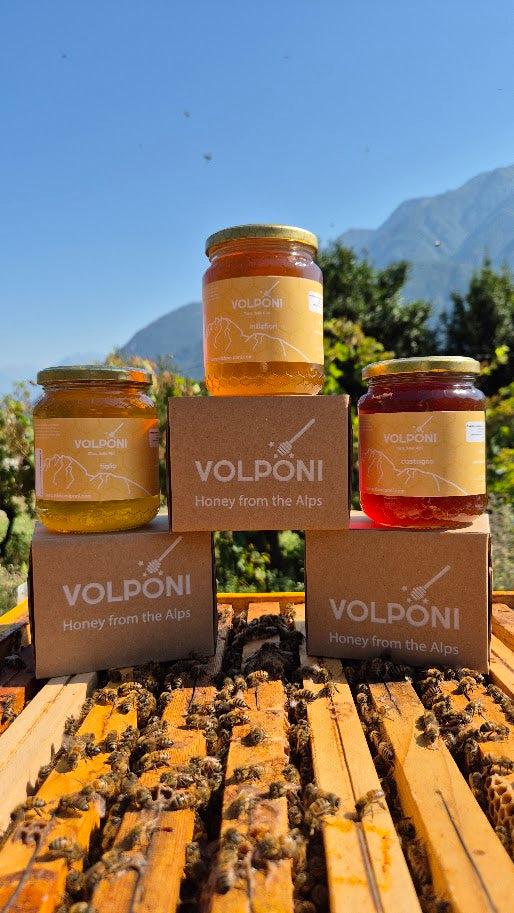
Miele Millefiori Alpino Grezzo – Artigianale Valle Ossola
Prezzo di listino Da €4,20 EURPrezzo di listinoPrezzo unitario -
Miele di Tiglio Alpino Grezzo – Rilassante e Balsamico
Prezzo di listino Da €4,50 EURPrezzo di listinoPrezzo unitario -
Miele di Castagno Alpino Grezzo – Intenso e Antiossidante
Prezzo di listino Da €4,50 EURPrezzo di listinoPrezzo unitario -
Miele di Acacia Grezzo – Delicato, Chiaro e Naturalmente Dolce
Prezzo di listino Da €4,80 EURPrezzo di listinoPrezzo unitario


